

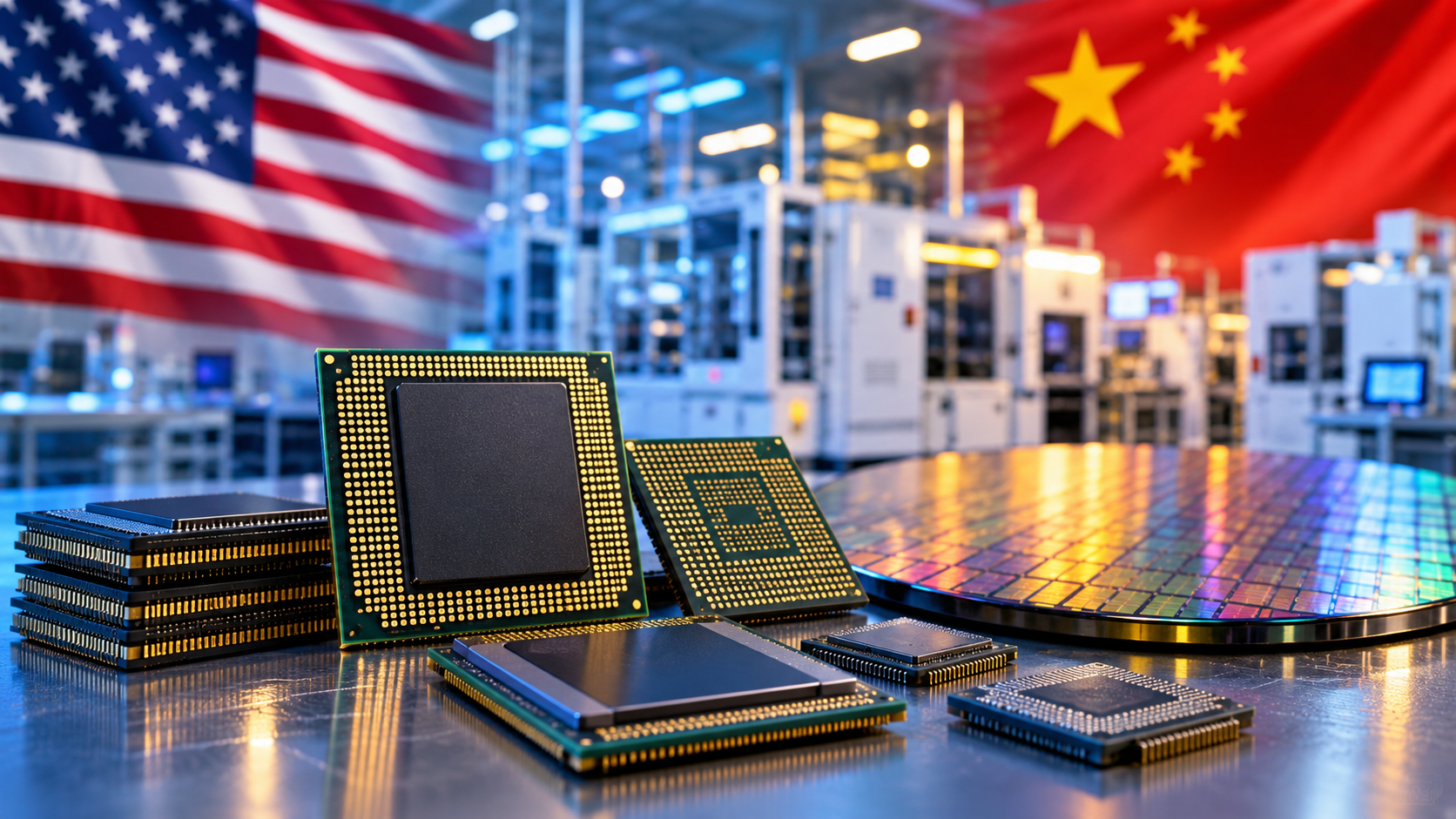
The global competition for artificial intelligence leadership is intensifying as new United States restrictions on advanced semiconductor technology create fresh challenges for Chinese technology companies.
The measures are affecting access to advanced AI chips and computing resources, prompting major Chinese firms to reconsider their technology strategies and increase efforts to develop domestic alternatives.
The developments highlight how competition between Washington and Beijing is extending beyond semiconductor exports into cloud computing, software development and the wider artificial intelligence industry.
New US Restrictions Create Challenges for Chinese Technology Firms
Recent US measures target Chinese companies’ access to advanced AI chips, including computing capacity provided through overseas data centres.
The restrictions are part of Washington’s broader effort to limit China’s access to advanced technologies considered strategically important for artificial intelligence and national security.
The measures have created uncertainty among investors and technology companies that depend on advanced processors to train and operate increasingly sophisticated AI systems.
According to reporting by Reuters on November 20, the latest developments have placed additional pressure on Chinese technology stocks as markets assess the potential consequences for the country’s AI ambitions.
Alibaba and Tencent Assess the Impact
Two of China’s largest technology companies, Alibaba and Tencent, have acknowledged that the restrictions could affect parts of their computing and AI development plans.
Tencent executives indicated that the company’s existing AI services could remain relatively resilient because many of its inference workloads can operate using domestic chips.
However, the company also acknowledged that restrictions could slow the development of its next-generation AI models in the near term.
Alibaba has similarly warned that the measures could affect some of its products and services in the coming year.
The company indicated that its cloud computing expansion plans could face additional challenges as it adjusts to the changing availability of advanced computing resources.
These developments demonstrate how access to specialised hardware has become a major factor in the competitiveness of global technology companies.
China Accelerates Its Push for Domestic Semiconductor Technology
The restrictions are adding urgency to China’s efforts to establish a more independent semiconductor supply chain.
Domestic technology companies are exploring alternatives to imported processors and strengthening relationships with local semiconductor manufacturers.
The objective is to reduce dependence on foreign suppliers and ensure that the country’s growing AI industry has access to the computing resources required for future development.
However, producing advanced semiconductors remains technically challenging.
Manufacturing cutting-edge chips requires specialised equipment, advanced materials, sophisticated production processes and extensive research investment.
China’s domestic semiconductor industry has made progress, but limitations in advanced manufacturing equipment and production capacity remain important obstacles.
Why Advanced AI Chips Matter
Semiconductors are essential components of modern computing systems.
Advanced AI processors are designed to handle the large-scale calculations required to train artificial intelligence models, process information and operate complex digital services.
They are particularly important for:
- Training large artificial intelligence models.
- Operating generative AI applications.
- Powering cloud computing infrastructure.
- Supporting advanced data analytics.
- Developing autonomous and intelligent systems.
Restrictions on access to these components can therefore affect not only chip manufacturers but also cloud service providers, AI developers and businesses that rely on advanced computing infrastructure.
A Wider Technology Competition
The latest developments reflect a broader competition between the United States and China over leadership in strategically important technologies.
Both countries are seeking advantages in artificial intelligence, semiconductor manufacturing, advanced computing and digital infrastructure.
For the United States, export controls are intended to restrict access to technologies considered sensitive.
For China, the restrictions have strengthened the incentive to invest in domestic alternatives and reduce exposure to external supply disruptions.
The long-term outcome will depend on technological innovation, manufacturing capacity, international trade policies and the ability of companies to adapt to changing market conditions.
What This Means for the Global AI Industry
The ongoing semiconductor competition could have consequences far beyond the two countries.
Technology companies worldwide depend on interconnected supply chains for processors, manufacturing equipment and computing infrastructure.
Changes in access to advanced chips may influence investment decisions, product development timelines and the cost of building AI services.
The situation also raises important questions about the future structure of the semiconductor industry and whether global technology markets will become increasingly divided into separate supply ecosystems.
As artificial intelligence continues to expand into business, healthcare, education and industrial applications, access to advanced computing technology is likely to remain a major issue for governments and companies.
Sikandar Jamil Official will continue to follow developments in artificial intelligence, semiconductor innovation and the global technology industry.