


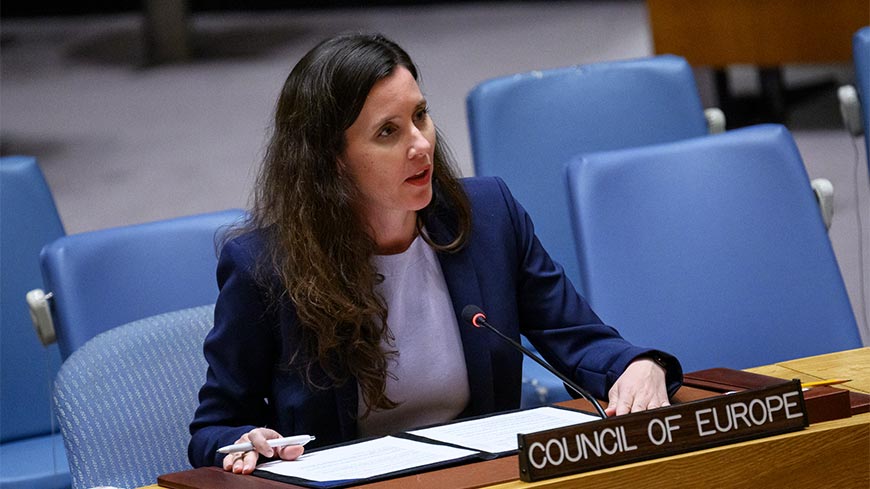
The Council of Europe has called on the international community to strengthen responsible and human-centred governance of artificial intelligence, highlighting the importance of protecting human rights as advanced technologies increasingly influence global security and public life.
The call was made during a United Nations Security Council debate on November 24, where representatives discussed the relationship between rapid technological change, international peace and security.
The Council of Europe emphasised that artificial intelligence should be developed and used within clear legal frameworks rather than allowing technological progress to move ahead without adequate safeguards.
Technology Must Remain Grounded in Human Rights
Artificial intelligence is transforming areas such as healthcare, education, business, communication, public administration and security.
While these technologies offer significant opportunities, their growing influence also raises concerns about privacy, discrimination, misinformation, surveillance and accountability.
The Council of Europe’s message to the United Nations highlighted the need to ensure that technological development contributes to stability and respects established legal principles.
Kelly Sipp, the Council of Europe’s Permanent Observer to the United Nations, addressed the Security Council during the debate organised under Latvia’s presidency.
She stressed the shared responsibility of governments and international institutions to ensure that technological change contributes to security rather than creating additional risks.
Why Responsible AI Governance Matters
Artificial intelligence systems increasingly influence decisions that can affect people’s everyday lives.
Automated systems may be used in recruitment, financial services, education, public services and law enforcement. Without appropriate oversight, these systems can produce unfair outcomes, reinforce existing discrimination or make decisions that are difficult for affected individuals to challenge.
Responsible AI governance therefore requires transparency, accountability, appropriate human supervision and effective protection of individual rights.
Governments must also consider how personal information is collected, processed and used by AI systems, particularly when dealing with sensitive data.
The international debate reflects growing recognition that technological innovation must be accompanied by legal safeguards and institutional responsibility.
Council of Europe Highlights Its International AI Convention
The Council of Europe has developed the Framework Convention on Artificial Intelligence and Human Rights, Democracy and the Rule of Law.
The convention provides an international legal framework addressing the potential impact of artificial intelligence on human rights, democratic institutions and the rule of law.
It focuses on ensuring that AI-related activities remain consistent with fundamental rights and democratic principles.
The Council of Europe has described the convention as the world’s first legally binding international treaty specifically addressing AI in relation to human rights, democracy and the rule of law.
Its approach provides a basis for governments to consider how innovation can be encouraged while protecting individuals and communities from potential harm.
The United Nations and the Future of AI Security
The Security Council discussion also reflected wider international concerns about the implications of rapid technological change for peace and security.
Artificial intelligence can influence military capabilities, cyber operations, information environments and critical infrastructure.
As these technologies become more powerful and widely available, international cooperation will be important in establishing standards, reducing risks and preventing misuse.
The Council of Europe has expressed its readiness to support the United Nations in efforts to ensure that AI and other digital technologies remain grounded in legal norms.
Protecting People in an Increasingly Digital World
The future of artificial intelligence should not be measured only by processing power, commercial success or technological breakthroughs.
Its wider impact must also be assessed through its effects on people, communities and fundamental freedoms.
Protecting privacy, ensuring equal treatment, maintaining access to justice and providing meaningful accountability should remain central to the development and use of emerging technologies.
International cooperation can help governments establish safeguards that encourage innovation without compromising human dignity.
The Council of Europe’s intervention at the United Nations highlights an important principle: technological progress and human rights protection must advance together.
Sikandar Jamil Official will continue to follow international developments involving human rights, digital freedoms, technology and global governance.
Sources:
2: Council of Europe — Framework Convention on Artificial Intelligence.