
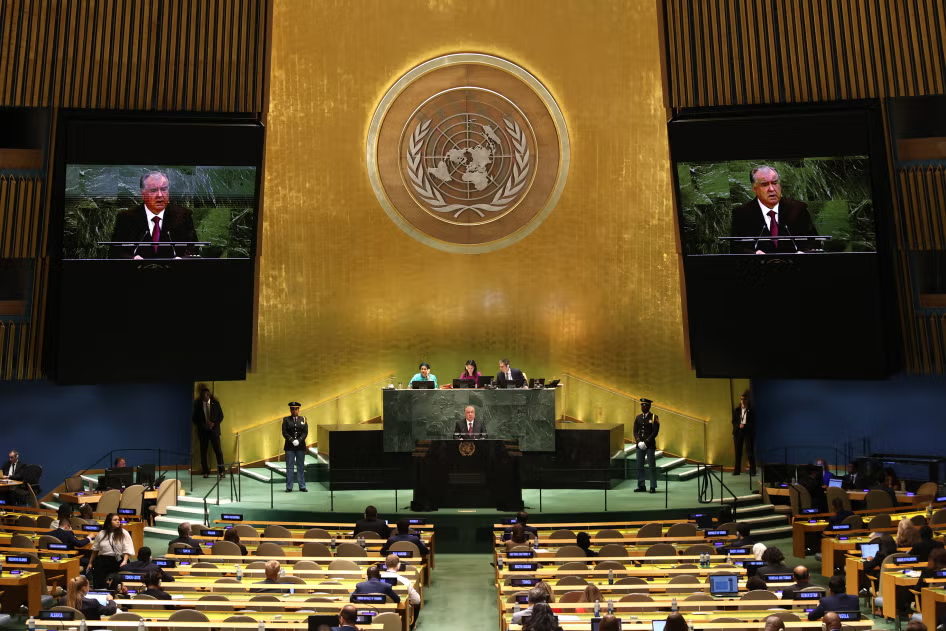
Tajikistan has faced renewed international calls to strengthen human-rights protections following its latest review at the United Nations, where member states raised concerns about restrictions on civil society, freedom of expression and the treatment of journalists and political opponents.
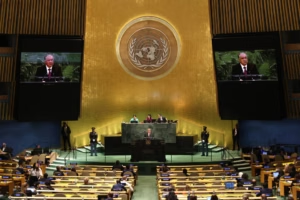
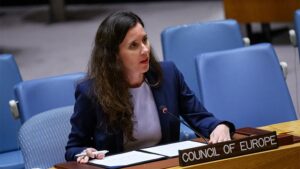
During the country’s Universal Periodic Review (UPR) on November 5, 2026, several UN member states urged the Tajik government to take concrete steps to protect fundamental freedoms, investigate allegations of abuse and strengthen accountability.
The developments were highlighted in a November 10 report by Human Rights Watch, which called on Tajikistan to address the recommendations and demonstrate measurable improvements in its human-rights record.
International Concerns Over Freedom of Expression
One of the major issues raised during the review was the treatment of journalists, lawyers, civil society organisations and individuals critical of government policies.
Several countries called for the release of journalists, lawyers and civil society activists they considered to be unlawfully detained.
Other recommendations focused on protecting freedom of speech, ensuring media independence and allowing non-governmental organisations to operate without intimidation or unnecessary restrictions.
The concerns reflect the importance of independent journalism and civil society in maintaining transparency, public accountability and democratic participation.
Freedom of expression is recognised as a fundamental human right under international human-rights standards.
Calls for Accountability and Independent Investigations
UN member states also raised concerns about allegations of violence and serious human-rights violations in the Gorno-Badakhshan Autonomous Region.
Some countries recommended independent, impartial and transparent investigations into reported deaths and other abuses associated with security operations in the region during 2021 and 2022.
The recommendations also addressed allegations of torture, arbitrary detention and unfair legal proceedings.
Human Rights Watch reported that several countries called for stronger mechanisms to prevent torture and ill-treatment, improve judicial independence and ensure that allegations of abuse are investigated effectively.
Accountability and access to justice remain important elements of protecting individuals against violations of their fundamental rights.
Protection of Women and Girls
The review also included recommendations concerning violence against women and girls.
Several countries urged Tajikistan to strengthen legal protections against domestic and gender-based violence, address early and forced marriages and improve support for survivors.
Recommendations included stronger legal frameworks, better access to protection services and improved mechanisms for investigating and prosecuting violence.
Effective implementation requires not only appropriate legislation but also accessible support services, trained professionals and public awareness.
Protecting women and girls from violence remains an important responsibility for governments and institutions.
Civil Society and Human Rights Organisations
Another important issue involved the operating environment for civil society organisations.
Human Rights Watch highlighted concerns about restrictions affecting independent organisations and the ability of human-rights defenders to work freely.
Civil society organisations play an important role in supporting vulnerable communities, documenting abuses, promoting legal awareness and providing assistance to people who may otherwise struggle to access justice.
Protecting their independence and allowing them to operate without intimidation can strengthen public trust and improve the implementation of human-rights commitments.
What Is the UN Universal Periodic Review?
The Universal Periodic Review is a United Nations Human Rights Council mechanism through which the human-rights records of all UN member states are examined.
Countries receive recommendations from other states on how to improve their human-rights protections and fulfil their international obligations.
The process takes place approximately every four and a half years and provides an opportunity to assess progress, identify continuing challenges and encourage governments to take corrective action.
The review of Tajikistan demonstrates how international institutions can provide a platform for discussing human-rights concerns and encouraging national reforms.
Turning International Recommendations into Practical Action
International recommendations can contribute to meaningful change only when they are followed by practical measures.
For Tajikistan, important priorities include protecting journalists and human-rights defenders, strengthening judicial independence, preventing torture, addressing gender-based violence and ensuring that civil society organisations can operate freely.
Transparent investigations and effective legal remedies are also essential for building public confidence in institutions.
The international community will continue to have an important role in monitoring progress and encouraging governments to meet their human-rights responsibilities.
A Wider Message for Human Rights Worldwide
The developments surrounding Tajikistan’s UN review highlight a broader international challenge: protecting fundamental freedoms requires more than formal commitments.
Governments must ensure that people can express their views, access justice, participate in public life and seek protection without fear of retaliation.
The protection of human rights is not limited to any single country or region. It is a shared international responsibility that requires cooperation, accountability and respect for human dignity.
Sikandar Jamil Official will continue to follow international human-rights developments, civil liberties and efforts to promote justice, accountability and freedom around the world.
Sources:
1: Human Rights Watch — Tajikistan: UN Members Urge Stronger Rights Protection, November 10, 2026.